Water Leak Detection Los Angeles
Water Leak Detection Los Angeles water Leak Detection Los Angeles is organized around one principle: use enough evidence to make the next step smaller, clearer and easier to defend. The service connects plumbing diagnosis with moisture and property-protection decisions.

A useful inspection should make the next decision smaller and clearer.
A source-first approach built around careful testing, clear explanations and respect for finished interiors.
Water Leak Detection Los Angeles is organized around one principle: use enough evidence to make the next step smaller, clearer and easier to defend. The service connects plumbing diagnosis with moisture and property-protection decisions. The inspection relates those observations to the plumbing system, occupied rooms and finished materials affected by water, so the source question and the moisture question are handled separately.
Clear communication before testing and before access.
The property owner should understand what is being checked, what each finding means and what remains uncertain.
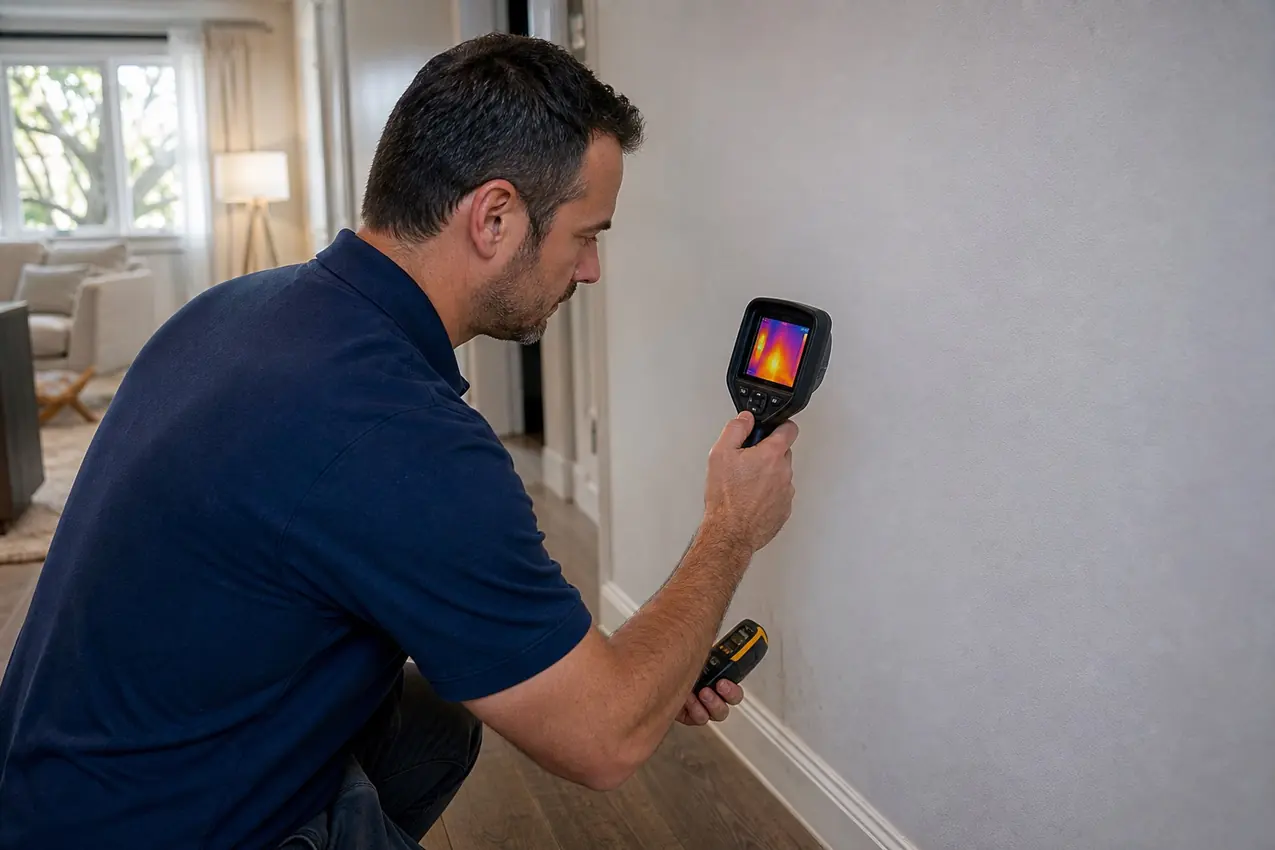
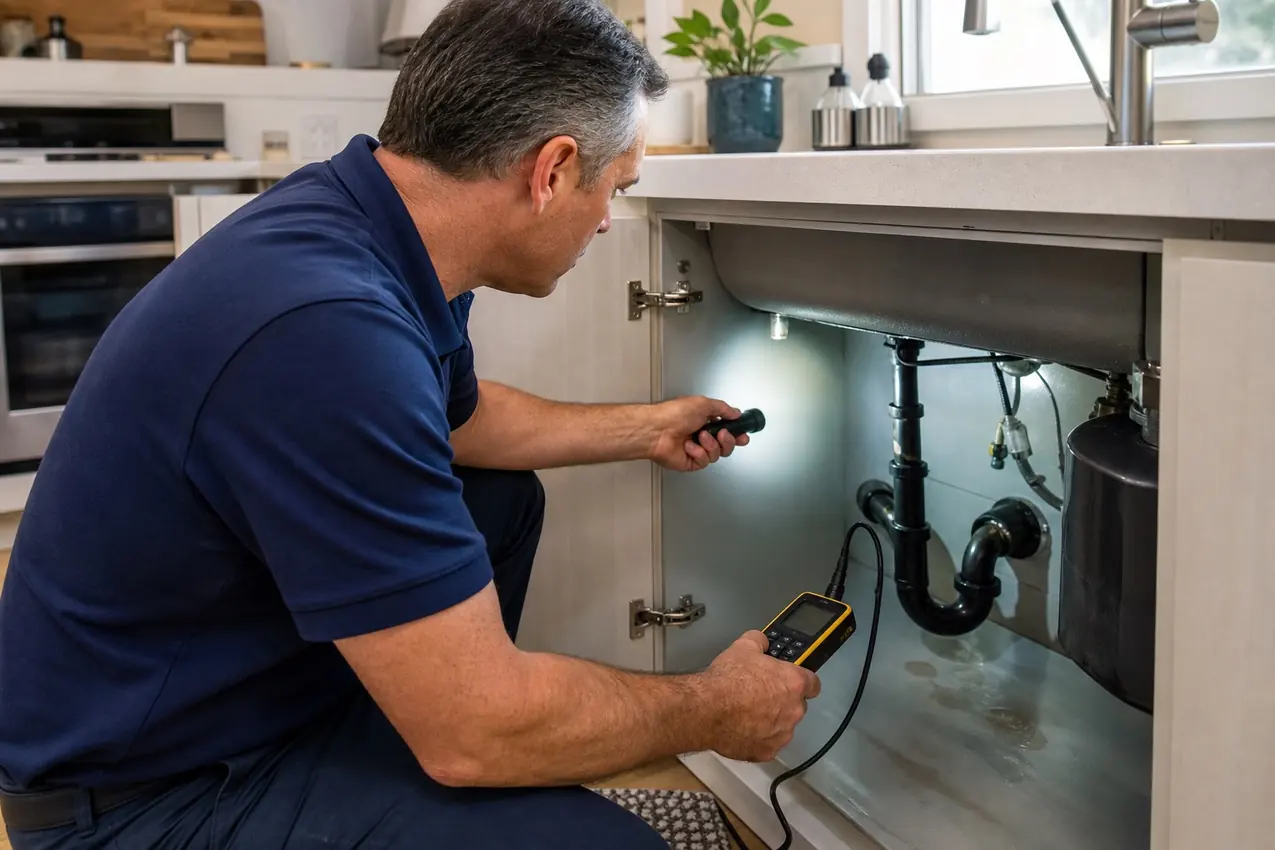
How we protect Los Angeles properties while reducing guesswork.
A sequence built around the reported symptom produces more useful evidence than testing everything at once.
Principle 1
Listen to the property owner and document timing
Principle 2
Review the building and likely plumbing layout
Principle 3
Begin with visible and accessible components
Principle 4
Use targeted instruments for the reported symptom
Principle 5
Explain confirmed findings and remaining uncertainty
Principle 6
Provide a practical sequence for source control and property recovery
Source control, repair access and wet materials are related—but not identical.
The responsible plumbing component can be small while the moisture footprint is larger, or a dramatic stain can come from an intermittent source.
Materials in the leak path
For this service we pay particular attention to the plumbing system, occupied rooms and finished materials affected by water. Comparable dry areas provide context because materials read and dry differently.
Avoid the expensive assumption
A useful inspection should reduce guesswork rather than replace one guess with a single instrument reading. Findings should agree before invasive access or a large repair scope is chosen.
Non-destructive testing for water leak detection los angeles supports the diagnosis when used in context.
No single instrument can identify every indoor leak. The symptom determines which evidence is useful.
Moisture readings in Los Angeles
Compare affected materials with dry references and outline the direction and extent of water movement.
Thermal patterns in Los Angeles
Screen a wider surface for temperature differences, then verify suspicious areas with other evidence.
Meter and isolation testing
Evaluate continuous water use and separate likely supply branches or systems when conditions allow.
Focused listening in Los Angeles
Listen for pressurized loss in a narrowed area while accounting for structure and ambient noise.
Water Leak Detection Los Angeles must account for the actual building—not a generic floor plan.
Older plaster, slab-on-grade construction, raised foundations, remodels, mixed piping and stacked multifamily wet rooms all change how water may travel.
Local construction informs the test plan
A Los Angeles home may combine an original structure with later additions and several generations of plumbing. A condo may place another bathroom, kitchen or common line above the visible stain. A hillside or split-level property can move water across framing before it appears in the room below.
These facts do not replace testing. They help prioritize the correct rooms, branches, finishes and access points so the findings fit both the plumbing behavior and the building.
Continue from the symptom to the right service.
Source diagnosis, moisture mapping and water-damage response may overlap, but each answers a different part of the problem.
About Our Leak Detection Process FAQ for Los Angeles
Practical answers about testing, access and the evidence that helps narrow the source.
How do you know which test to use?
The symptom, timing, building layout and accessible plumbing determine the test sequence. Moisture readings, thermal patterns, meter behavior, isolation and focused listening answer different questions and should not be treated as interchangeable.
Will About Our Leak Detection Process require opening a wall or floor?
The purpose of diagnosis is to reduce unnecessary access. Some confirmation or repair work may require an opening, but the area should be narrowed with accessible checks and multiple findings first.
Can water appear far from the actual leak?
Yes. Water can follow pipes, framing, joists, floor systems, cabinets and sloped surfaces before it reaches a visible edge or stain.
What should I tell the technician when I call?
Describe the affected room, when the symptom changes, which fixtures or weather conditions influence it, whether the meter moves, and any recent plumbing or remodeling work.
What happens if materials are already wet?
Active water is controlled first. Moisture mapping then helps define extraction, drying, monitoring and selective removal priorities for the affected materials.
Should a recurring stain be checked even when it feels dry?
Yes. An intermittent plumbing, appliance or weather-linked leak can stop between events. Document when it returns and avoid covering the evidence before the source is evaluated.
Start with the symptom.
Describe the room, timing, nearby fixtures and any change in the meter, pressure, weather or appliance use.